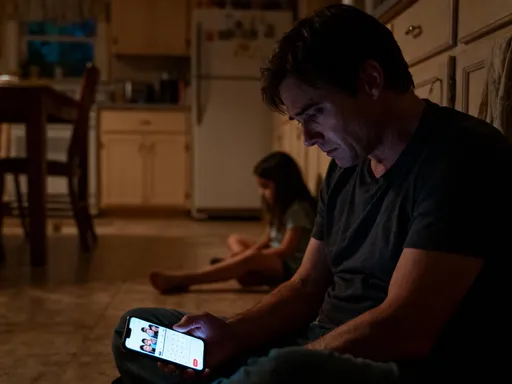
From Overwhelmed to Empowered: How Tracking My Learning Changed Everything
Starting your self-improvement journey can feel like climbing a mountain with no path. I once struggled to stay consistent—reading a few pages, watching a lecture, then losing momentum. But everything shifted when I began simply tracking my progress. It wasn’t about big wins; it was about noticing small steps. That tiny habit sparked a chain reaction, turning confusion into clarity and effort into achievement. If you’ve ever felt like you’re trying your best but going nowhere, I want you to know: it’s not you. It’s the system. And the good news? A small tweak—something simple, quiet, and surprisingly powerful—can change everything. Let me tell you how it did for me.
The Breaking Point: When Passion Felt Like Pressure
I used to love learning—until it became another item on my to-do list. I’d sign up for online courses, download e-books, and promise myself “this time will be different.” I had every intention of finishing that photography course, reading that book on mindfulness, and finally learning how to bake sourdough like a pro. But life got busy. The kids needed help with homework, dinner had to be made, and by the time the house was quiet, I was too tired to open a single tab on my laptop. The guilt started creeping in. Why couldn’t I stick with anything? Was I just not disciplined enough?
Here’s what I realized: it wasn’t that I didn’t care. I *did*. But caring wasn’t enough. Without a way to see progress, even the most exciting goals start to feel heavy. I’d open a course video, watch five minutes, get interrupted, and close it—only to feel like I’d accomplished nothing. The next day, I’d start over, losing motivation fast. I wasn’t lazy—I was flying blind. I had no idea how far I’d come because there was no record, no proof, no gentle reminder that I’d already done something. I needed a compass, not more willpower. And that’s when I discovered the quiet power of tracking.
Discovering the Power of Small Signals
Everything changed when I started logging just 10 minutes of daily reading. That’s it. Not an hour. Not a chapter. Just 10 minutes. I didn’t use any fancy app at first—just a simple note in my phone titled “Learning Log.” Every night before bed, I’d write down what I’d done: “Read 10 min – mindfulness book,” or “Watched one video – photography basics.” At first, it felt pointless. Ten minutes? That’s barely anything. But after a week, I looked back and saw something powerful: five days in a row. I hadn’t missed a single day. That tiny record made my effort *visible*.
Suddenly, I wasn’t asking “Am I making progress?”—I could *see* that I was. That shift—from guessing to knowing—was everything. It’s like turning on a light in a dark room. The path didn’t change, but now I could see where I’d been. On the days I skipped, the empty space in my log stood out. Not in a shaming way, but in a “huh, that’s interesting” kind of way. It wasn’t about perfection. It was about awareness. And that awareness gave me back a sense of control. I wasn’t failing—I was simply choosing not to show up that day. And the next day? I could choose differently.
This small act of tracking did something else too: it helped me redefine what success looked like. I used to think progress meant finishing a whole course or reading a book in a week. But tracking taught me that consistency matters more than speed. Ten minutes a day, five days a week, adds up to nearly nine hours of learning in a month. That’s not nothing. That’s real growth. And when you can see it, you start to believe in it.
Choosing the Right Tool Without Overcomplicating It
Now, I’ll be honest—I tried a lot of apps before I found one that actually worked for me. I downloaded a few that promised detailed analytics, progress charts, and even AI-powered recommendations. But they felt overwhelming. I’d spend more time trying to figure out how to use the app than actually learning. One had a streak counter, but it sent so many notifications I started ignoring them. Another looked beautiful, but it required me to log every detail—time started, time ended, topic covered, mood while learning. Who has time for that?
The one that finally stuck was simple. It didn’t have flashy graphs or social features. It just let me tap a button to mark a session as complete and showed a calendar with little green checkmarks. That’s it. No pressure. No noise. Just a quiet record of my effort. I learned something important: the best tool isn’t the most advanced—it’s the one you’ll actually use. Think of it like a pair of shoes. You wouldn’t wear high heels on a hiking trail, right? Same goes for productivity tools. They should support your journey, not slow you down.
The key is matching the tool to your rhythm. If you’re someone who loves data, maybe a spreadsheet works. If you’re more visual, a habit-tracking app with a calendar view might be better. But if you’re like me—busy, tired, and just wanting something that works—keep it simple. A notebook, a notes app, or a basic habit tracker is more than enough. The goal isn’t to impress yourself with complexity. It’s to create a system that makes showing up easier, not harder.
Building the Habit Loop: Trigger, Action, Reward
Once I had a tool, I needed a routine. I knew from reading about habits that they thrive on consistency—doing the same thing in the same context until it becomes automatic. So I anchored my tracking to something I already did every day: my morning coffee. The moment I sat down with my mug, I’d open my tracking app and log yesterday’s progress. Sip, tap, done. That small ritual created a feedback loop: seeing my streak grow became its own reward.
There’s something deeply satisfying about a long streak. It’s not about being perfect—because I wasn’t. I missed days. Life happened. But the streak wasn’t a judge. It was a mirror. On days I didn’t study, the empty box felt… off. Not shameful, not dramatic—just noticeable. And that awareness was often enough to get me back on track. “I’ve had six days in a row. I don’t want to break it,” I’d think. And so I’d sit down for 10 minutes, just to keep the chain going.
This is how habits grow—not through motivation, but through tiny, repeatable actions that build momentum. The trigger (coffee) led to the action (logging), which led to the reward (seeing progress). Over time, the reward shifted from external (“look at my streak!”) to internal (“I showed up for myself”). That’s when the real change happened. I wasn’t doing it for the checkmark anymore. I was doing it because it felt good to honor my own word.
Seeing Growth Where I Once Saw Stagnation
After three months, I did something I’d never done before: I reviewed my logs. I scrolled through the calendar and counted the checkmarks. I’d completed 87 sessions. That’s more than three hours of learning every week. I’d finished two books I’d started and abandoned multiple times before. I’d completed a course on photography basics and even tried taking portraits of my kids in natural light—something I’d always been too nervous to attempt.
But more than the achievements, I noticed a shift in how I saw myself. I stopped comparing my progress to others—no more scrolling through social media and feeling behind. I started trusting my own pace. The data didn’t lie: I *was* growing. I wasn’t the person who “never finishes anything” anymore. I was someone who shows up, even when it’s hard. That quiet confidence replaced self-doubt. And it showed up in other areas of my life too. I started making healthier meals because I trusted I could stick with small changes. I signed up for a community art class because I believed I could learn something new.
Progress isn’t always loud. It doesn’t always come with applause or dramatic transformations. Sometimes, it’s just a green checkmark on a screen. But when you can see it, day after day, it adds up to something powerful. It teaches you that you are capable. That you can grow. That you are not stuck. And that belief? That’s the real magic of tracking.
Sharing the Journey: Strengthening Connections Through Growth
One of the most unexpected benefits of tracking my learning was how it deepened my relationships. I started talking about what I was learning with my sister during our weekly phone calls. Not to impress her, not to show off, but to reflect. “I finally finished that book on mindfulness,” I said one day. “It took me three months, but I did it.” She paused and said, “That’s amazing. I’ve been meaning to start meditating, but I never stick with it.”
The next week, she told me she’d downloaded a meditation app and was tracking her sessions. We started sharing our streaks like little victories. “Six days in a row!” she’d say. “I broke my streak, but I started again today,” I’d reply. It wasn’t competition. It was mutual encouragement. We weren’t comparing our paths—just celebrating each other’s effort. And something beautiful happened: our conversations went deeper. We weren’t just talking about the kids or the weather. We were talking about growth. About trying. About showing up.
Technology didn’t replace our connection—it gave us a shared language for it. We weren’t just family anymore. We were allies in becoming better versions of ourselves. And that made all the difference. Because growth doesn’t have to be a solo journey. It can be something we carry together, quietly cheering each other on, one small step at a time.
A Lifelong Companion: Why This Practice Stays
This isn’t a quick fix. It’s not a 30-day challenge or a trendy app I’ll abandon in a month. It’s a mindset. I still use tracking today—not because I have to, but because it helps me stay aligned with what matters to me. It’s like a journal that shows not just *what* I did, but *that* I showed up. On tough days, when I feel overwhelmed or doubt myself, I scroll back through my logs. I see the days I kept going even when I didn’t feel like it. I see the progress that wasn’t obvious in the moment but is undeniable in hindsight.
Tracking hasn’t made me perfect. I still have off days. I still get distracted. But it has made me purposeful. It reminds me that growth isn’t about big leaps—it’s about small, consistent actions that add up over time. And it’s taught me to celebrate the effort, not just the outcome. Because sometimes, the bravest thing you can do is show up for yourself, even when no one is watching.
If you’ve ever felt stuck, if you’ve ever started something with excitement only to lose steam, I want you to try this. Pick one thing you want to grow in—reading, learning a skill, practicing gratitude, moving your body. And start tracking it. Just 10 minutes. Just one small action. Log it in a way that feels easy and kind. Don’t aim for perfection. Aim for showing up. Because every time you do, you’re building more than a habit. You’re building belief. Belief in your ability to grow, to change, to become the person you’ve always wanted to be. And that, my friend, is the real measure of progress.