After Trying 12 Online Painting Platforms, This One Finally Made Art Feel Effortless
Ever sat down to paint online, only to feel overwhelmed by complicated tools, slow brushes, or a blank canvas that stares back like it’s judging you? I’ve been there—frustrated, stuck, and ready to quit. But then I found a platform that changed everything. It didn’t just teach me to paint; it helped me enjoy the process. No more technical stress, no more creative blocks—just real progress, one calm stroke at a time. And it can do the same for you.
The Moment I Almost Gave Up on Digital Art
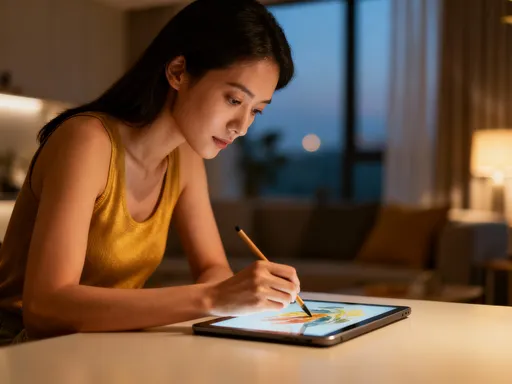
It was 10:30 p.m. My kids were finally asleep, the kitchen was clean, and for the first time that day, I had a moment to myself. I opened my tablet, excited to try that watercolor landscape I’d been thinking about all week. I’d seen a beautiful tutorial online and felt a spark—maybe this was my chance to finally create something lovely, just for me. But within minutes, everything went wrong. The brush lagged, the colors bled in ways I didn’t expect, and the menu kept freezing. I clicked “undo” so many times I lost track. My shoulders tensed. My jaw clenched. That spark? Gone. In its place was that familiar ache—the one that whispers, You’re not good enough. You don’t have the time. You’re too tired to learn something new.
I wasn’t just struggling with the tool. I was struggling with the idea that maybe creativity wasn’t for people like me—busy, practical, juggling a million things. I had always loved looking at art, but making it? That felt like a luxury I couldn’t afford. I closed the app and sighed. Another failed attempt. Another dream tucked away in the “maybe someday” drawer. But deep down, I knew I wasn’t ready to let go. I just needed something—anything—that didn’t make me feel like I was fighting against the technology itself.
Why Most Online Painting Platforms Fall Short
Over the next few months, I tried nearly a dozen different online painting platforms. Some were free, some cost a little, and a few were even recommended by professional artists. But here’s the truth: most of them are built for people who already know what they’re doing. They assume you understand terms like “layer opacity,” “blending modes,” or “pressure sensitivity.” They throw you into a sea of tools and say, “Swim.” And if you can’t? Well, maybe you’re just not cut out for this.
I remember one platform where I spent 20 minutes just trying to figure out how to change the brush size. The icon was tiny, hidden behind a dropdown I didn’t even know existed. Another had beautiful brushes, but they responded so slowly that by the time my stroke appeared, I’d already moved on. It felt like trying to write with a pen that only shows your words five seconds later. Frustrating doesn’t even begin to cover it.
And then there were the ones that were too simple. Just a few basic tools, like a digital version of a child’s coloring app. Sure, they were easy to use, but they didn’t let me create anything meaningful. I wanted to paint a sunset, not just fill in a pre-drawn shape. I wasn’t looking for a toy. I was looking for a tool that could grow with me—something that would help me express what I felt, not limit me.
The real problem wasn’t just the design. It was how these platforms made me feel. Every glitch, every confusing menu, every failed stroke chipped away at my confidence. I started to believe that maybe the issue wasn’t the tool—it was me. Maybe I just didn’t have the “artistic gene.” But looking back, I realize something important: when a tool is hard to use, it doesn’t mean you’re not capable. It means the tool isn’t designed for real life. And real life—especially for someone like me, managing a home, a family, and a thousand little responsibilities—doesn’t have room for extra frustration.
Discovering the Platform That Changed Everything
Then, one rainy afternoon, I stumbled on a platform that felt different from the moment I opened it. No flashy ads. No overwhelming dashboard. Just a clean, calm screen with a single invitation: Start with a shape. That was it. No pressure. No jargon. Just a gentle nudge to begin.
I clicked on a circle. The brush responded instantly—smooth, fluid, like real paint. I tried a gradient, blending two colors, and it worked on the first try. No lag, no weird glitches. It just… worked. I remember sitting back and thinking, Wait, is this really happening? For the first time, the tool wasn’t in my way. It was helping me. I didn’t feel like I was wrestling with technology. I felt like I was creating.
But what really surprised me wasn’t just how easy it was to use. It was how it made me feel. Calm. Focused. Present. I wasn’t thinking about the dishes or the grocery list or the email I forgot to send. I was in the moment, watching colors blend, lines form, shapes take life. It wasn’t perfect—but it was mine. And for someone who spends most of her day doing things for everyone else, that feeling was priceless.
That first session lasted only 15 minutes. But when I put my tablet down, I didn’t feel guilty for “wasting time.” I felt renewed. Like I’d given myself a gift. And that’s when I realized: this wasn’t just another painting app. This was something deeper. A space where I could breathe, express, and remember who I was outside of my roles as mom, wife, cook, cleaner, planner, problem-solver.
How It Reduces Problems Before You Even Start
What makes this platform different isn’t just what it has—it’s what it prevents. Think about how many decisions you make in a single day. What to cook. What to wear. Who needs a ride. What’s for dinner tomorrow. By the time evening rolls around, your brain is exhausted. That’s called decision fatigue. And most creative tools don’t account for it. They assume you have mental energy to spare. This one doesn’t.
From the very first time you open it, the platform guides you gently. There’s a short, friendly onboarding that takes less than two minutes. No long videos. No technical quizzes. Just a few simple steps: choose your goal (relax, learn, create), pick your comfort level (beginner, intermediate, just curious), and you’re in. It remembers your preferences, so the next time, it’s even easier.
One of my favorite features is the “Calm Mode.” When I turn it on, the interface simplifies even more. Only the most essential tools appear. The background fades to a soft gray. Even the color palette is limited to soothing, earthy tones—no neon greens or loud reds to overwhelm me. It’s like the app knows I’m tired and says, “Let’s keep this simple tonight.”
And then there are the little things that make a big difference. Auto-save, so I never lose my work. Context-sensitive tips that appear only when I pause—never intrusive, always helpful. Suggested brushes based on what I’m painting. If I start drawing a tree, it quietly offers a textured brush that mimics bark. If I’m working on skies, it suggests a soft blend tool. It’s not doing the work for me—it’s just giving me a nudge in the right direction.
But perhaps the most powerful feature is the “Start Small” prompts. Instead of facing a blank canvas, I can choose from mini-projects like “Paint a Teacup in 10 Minutes” or “Create a Calming Gradient Sky.” These aren’t full paintings. They’re tiny acts of creativity that feel achievable, even on the busiest days. And because they’re short, I don’t feel guilty taking the time. In fact, I look forward to them.
Turning Frustration into Progress: A Day-in-the-Life Demo
Let me walk you through a real session—one from last Tuesday, after a long day of work and school pickups. I was tired. My back hurt. My to-do list was still half-finished. I opened the app, not expecting much. But then I saw the prompt: “Draw a Window with Raindrops.” Simple. Quiet. Peaceful.
I chose it. The canvas loaded with a faint outline of a window frame—just a guide, not a requirement. I could follow it or ignore it. I picked a soft blue-gray for the sky. The brush glided smoothly. I added a few clouds. Nothing fancy. But then I tried the raindrop tool. Instead of drawing each drop individually, I could just tap and drag, and the app created realistic, uneven droplets with tiny reflections. Oh, that’s clever, I thought. I’d usually spend ten minutes trying to make drops look real. Today, it took seconds.
Then came the moment I used to dread: the shaky line. I was outlining a branch outside the window, and my hand slipped. In the past, I would’ve panicked. Undo, undo, undo! But this time, the app had a “Steady Line” assist. I enabled it, and suddenly, my wobbly stroke turned smooth and even. Not perfect—but natural. Human. I didn’t have to start over. I didn’t have to give up. I just kept going.
Halfway through, I thought, I’d usually quit here. But something kept me going. Maybe it was the soft background music the app suggested—gentle piano, nothing distracting. Maybe it was the way the colors felt so responsive, like they were listening to me. Or maybe it was just knowing that no one would see this. This wasn’t for Instagram. It wasn’t for praise. It was just for me.
When I finished, I didn’t have a masterpiece. I had a simple scene: a window, rain, a quiet tree. But I also had something else—a sense of calm. A quiet pride. I had created something, not because I had to, but because I wanted to. And in that moment, I felt more like myself than I had all day.
More Than Just Painting—Rediscovering Creativity and Calm
Here’s what I didn’t expect: painting didn’t just stay on the screen. It started to spill into the rest of my life. I noticed it first in small ways. I became more patient with my kids when they spilled juice. I paused before reacting to a stressful text. I started noticing colors in everyday things—the way sunlight hits a mug in the morning, the soft pink of a child’s sock folded in the laundry.
But it went deeper than that. Creativity, I realized, isn’t just about making art. It’s about seeing possibilities. It’s about believing that something small can grow into something beautiful. And that mindset started to change how I approached everything. When a recipe failed, I didn’t get angry—I tweaked it. When a plan fell through, I didn’t panic—I adapted. I became more flexible, more resilient.
And then there was the stress relief. Studies show that creative activities can lower cortisol levels, the hormone linked to stress. I didn’t need a study to tell me that. I could feel it in my body. My shoulders relaxed. My breathing slowed. Even my sleep improved. Painting became my version of meditation—one where I wasn’t trying to clear my mind, but to fill it with something gentle, something good.
But the biggest surprise was how it helped me reconnect with myself. So much of my identity is tied to what I do for others. Being a mom. Running a home. Supporting my partner. And I love those roles. But they don’t always leave room for me—the woman who once dreamed of being an artist, who used to sketch in notebooks, who still believes in beauty and quiet moments.
Painting gave me back a piece of that. Not because I became a great artist. But because I gave myself permission to try, to play, to be imperfect. And in doing that, I remembered that I’m more than my responsibilities. I’m a person with thoughts, feelings, and a quiet kind of strength that grows when I take care of myself.
How You Can Start—Without Pressure or Perfection
If you’ve ever thought, I’m not creative, I want you to know this: creativity isn’t a talent. It’s a practice. And like any practice—cooking, gardening, even folding laundry—it gets easier with time. You don’t need expensive tools. You don’t need hours of free time. You don’t need to be “good.” You just need to start.
Here’s how I suggest you begin: set a timer for five minutes. Open the app. Choose a “Start Small” prompt. Don’t worry about the outcome. Don’t worry about sharing it. Just let your hand move. If you make a “mistake,” leave it. That wobble in the line? That’s part of your story. That unexpected color blend? That’s your voice.
And if you’re worried about not knowing where to begin, let the app guide you. Try one of the step-by-step mini-tutorials. They’re not lectures. They’re more like a friend saying, “Hey, want to try this?” You’ll learn how to blend, shade, and layer—without even realizing it. And the more you do it, the more natural it feels.
Most importantly, let go of perfection. No one expects a beginner pianist to play a concerto. No one expects a first-time baker to make a perfect soufflé. So why expect yourself to paint a masterpiece on day one? Your only job is to show up. To try. To enjoy the process.
And if you’re thinking, But I’m too busy, I get it. But what if those five minutes could be the most nourishing part of your day? What if that tiny act of creation could lift your mood, clear your mind, and remind you that you matter—not just as a caretaker, but as a person with dreams and quiet joys?
You don’t need to be an artist to make art. You just need to be you. And the right tool—one that’s kind, simple, and designed for real life—can help you find your way back to that truth. So go ahead. Open the canvas. Take the first stroke. Let it be messy. Let it be imperfect. Let it be yours. Because sometimes, the most powerful thing we can do is create something—just for the joy of it.